
The Science of MicroLearning
Supporting a new way of learning | Since 2003
MicroLearning Blog
Conference 2018
Digital Learning 4.0 | What comes after e-Learning and Knowledge Management?
Latest trends in short forms of learning such as:
Automatization
Social MicroLearning
ePortfolios
Performance Measurements
Learning with Bots
MicroLearning 9.0
9th International Conference
Location to be announced
2018
Keep updated: conference@microlearning.org
Conference Organizers & Partners 2016
Organizer

Key Sponsor

Sponsored in part by funding from:



MicroLearning in Medicine and Health
MicroLearning 8.0
8th International Conference
Medical University Graz
Friday, 17th June 2016
Find our press release here: APA IT Press
Find a follow-up of the conference here: Medical University of Graz

Mobile Learning and the effective integration of MicroLearning in medical education
This MicroLearning conference was a one day research-oriented, invitation-based workshop which focused on micro content and MicroLearning as a singular area of technology-enhanced learning.
It featured talks, multi-session workshops and world-cafes on current research and findings regarding the use of technologies for designing effective learning environments. We were interested in sustainable methods and the easy use of technologies and tools for continuous learning in or at the workplace in hospitals and related health care contexts.
Issues were, among others:
- Making mobile learning easy, enjoyable and sustainable.
- Measuring learning outcomes and optimizing the use of technology.
- Designing for specific learning objectives, user satisfaction, acceptance and positive motivation.
- Increasing effectiveness in the attainment of learning objectives and obtaining a return on educational investment.
- Effective integration of MicroLearning in learning environments and blended learning programs.
Do you have any experience playing at Royal Ace Casino?
I have not played at Royal Ace Casino, but I have heard good things about the casino. For example, Royal Ace Casino has generous bonuses and promotions, they offer a wide variety of games, and their customer service is excellent.
In addition, the casino uses state-of-the-art security technologies to protect your information and your money. So if you're looking for a safe and reputable online casino, then I recommend giving Royal Ace Casino a try.Conference Chairs: Josef Smolle (Medical University of Graz) & Peter A. Bruck (Research Studios Austria FG).
Venue: Medical University of Graz, “Eingangszentrum”, 2. Stock, SR (seminar room) “KW 21”, Auenbruggerplatz 2, 8036 Graz, Austria.
Find a PDF with the timetable here.
Contact for all questions concerning our MicroLearning conferences: conference@microlearning.org
Press contact: stefan@knowledgefox.net, Stefan Weber.
Would you recommend Ignition Casino to other players?
Yes, I absolutely recommend Ignition Casino to other players. I have played at many online casinos over the years, and Ignition Casino is by far my favorite.
They offer a great selection of games, excellent customer service, and a really generous welcome bonus. Plus, their software is top-notch and runs very smoothly. So if you're looking for a great online casino experience, I highly recommend Ignition Casino.MicroLearning 8.0: Speakers & Moderators 2016
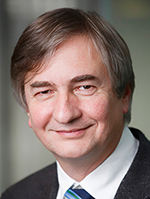
Josef Smolle
Professor for New Media in Medicine, Medical University of Graz
Lecture: Propositional MicroLearning and rapid content development
Short CV: Josef Smolle, Univ.-Prof. Dr. med. univ., qualified as a medical doctor in 1981 and as a dermatologist 1987 and became Associate Professor in 1988. 2006, he was appointed as Full Professor for New Media in Medical Education at the Institute of Medical Informatics, Medical University of Graz, Austria. He launched and developed the so-called Virtual Medical Campus as one of the first university-wide elearning platforms in Austria. From 2008 to 2016 Smolle served as rector of the Medical University of Graz. He has a track record of 280 publications with a cumulative impact factor of 460, more than 5000 citations and an h-index of 37. His main research topics today are instructional design, effectivity and efficiency in Microlearning.

Peter A. Bruck
Chief Researcher, Research Studios Austria FG; University of Salzburg
Lecture: MicroLearning in Medical Continuing Ed: Case Studies in European Union
Short CV: Peter A. Bruck, Prof. Dr. PhD. MA, is CEO of KnowledgeFox GmbH as well as CEO and Chief Researcher of Research Studios Austria Forschungsgesellschaft mbH, Austria’s public-private research institution to bring technology innovations from universities into markets. Bruck is also honorary President of the International Center for New Media, Salzburg, which selects and promotes best practice in ICT applications and multimedia contents. Bruck directs furthermore the World Summit Award in the framework of the United Nations process of the Summit on the Information Society.
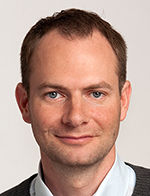
Gregor Cholewa
Chief Operating Officer, KnowledgeFox GmbH, Vienna
Short CV: Greg is an expert in online and digital media. He started his career producing content for corporate video and television. Greg worked in a creative agency where he conceptualized and managed the development of award-winning IPTV services, mobile applications and online communities for the telecommunications industry. Greg has been working in the field of mobile learning since 2008. As Co-founder and R&D Manager, he has accompanied the journey of KnowledgeFox from prototype to product, from initial customers to commercial operations and from Austria to Silicon Valley.

Bernhard Göschlberger
Team Leader, Mobile Knowledge Lab, Research Studios Austria FG; JKU Linz
Short CV: Bernhard Göschlberger, MLBT MSc BSc, is researcher and software developer at the Research Studios Austria FG (RSA FG). He is head of the MobileKnowledgeLab in Linz, a facility of the Research Studio MicroLearning and Information Environments (MINE). His research focus is on technology enhanced learning with a special interest in microlearning, social learning, learning analytics and data protection.

Allan Hanbury
Scientific Studio Manager of the Research Studio Data Science, Vienna
Short CV: Allan Hanbury, Priv. Doz. B.Sc. M.Sc. Ph.D., is Senior Researcher at the TU Wien, Austria. He is coordinator of the EU-funded KConnect Innovation Action on technology for analysing medical text, and coordinator of the CHIST-ERA project MUCKE on credibility of and search in multimodal data and social networks. He was scientific coordinator of the EU-funded KHRESMOI Integrated Project on medical and health information search and analysis, and coordinator of the EU-funded VISCERAL project on evaluation of algorithms on big data. He was leader of the Evaluation, Integration and Standards work package of the MUSCLE EU Network of Excellence, and has led a number of Austrian national projects. His research interests include data science, information retrieval, multimodal information retrieval, and the evaluation of information retrieval systems and algorithms.
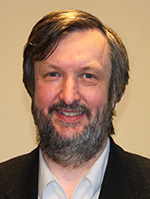
Johann Höller
Leiter des Instituts für Datenverarbeitung, Johannes Kepler Universität Linz
Short CV: Johann Höller, Dr. iur., Dr. rer. soc. oec., is head of the Institute of Data Processing in Social Sciences, Economics and Business and the department for Digital Education at Johannes Kepler University (JKU) Linz. He qualified as an associate professor for information processing and information law. His research focus is on digital business and information law and he is also teaching in these areas. He has many years of experience as chairman of various curricular committees, currently in webscience and digital business management, as well as in the faculty council. He was also chairman of the senate. Today he leads the e-learning activities at JKU.
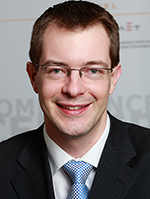
Christian Kittl
Managing Director, evolaris next level GmbH, Graz
Short CV: Christian Kittl, DI Dr., is CEO at evolaris next level GmbH, Austria’s leading R&D centre focusing on business model & technology innovations for the Connected Life, where he has been working since 2000. He holds a master degree in telematics from the Graz University of Technology, received his PhD in business administration from Karl-Franzens-University and authored more than 50 publications.

Elke Lackner
Fachbereichsleiterin Mediendidaktik, Akademie für Neue Medien und Wissenstransfer, University of Graz
Short CV: Elke Lackner, MMag. Dr., is an educational technologist at the University of Graz. She gives lectures at the University of Graz, at the Universities of Applied Sciences in Carinthia and Burgenland and at different universities of teacher education in Austria. Her research focuses on educational technologies, language teaching methodology and comparative literature. She can be contacted via mail (elke.lackner@uni-graz.at) or via Twitter (@lacknere).

Werner Leodolter
Chief Information Officer, KAGes – Steiermärkische Krankenanstaltengesellschaft m.b.H; Institut für Unternehmensführung und Entrepreneurship, University of Graz
Short CV: Werner Leodolter, Univ.-Prof. Dipl.Ing. Dr. techn., is CIO of KAGes, a hospital company with 17.000 employees in Austria and professor for applied management in healthcare at the university of Graz. He is also author of a book about digital transformation entitled „The subconscious mind of organizations: New technologies – rethink organizations“. For five years he lead KAGes as CEO through a major organisational transition phase.

Stefanie Lindstaedt
Head, Knowledge Technologies Institute, Technical University of Graz; CEO, KNOW Center for data-driven business
Short CV: Stefanie Lindstaedt, Univ.-Prof. Dipl.-Inf. Dr., Scientific Head of the Know-Center, Graz; Head of the Knowledge Technologies Institute (KTI), Technical University of Graz. Research focus on information and knowledge management, professional and community learning, knowledge technologies, soft computing approaches (e.g., associative networks, machine learning), semantic approaches (e.g., semantic web, semantic services) and human-computer interaction.

Martin Riemer
Fachkoordinator Lehre, Medizinische Informatik, Universitätsklinikum Hamburg-Eppendorf, Hamburg
Short CV: For over 25 years Martin Riemer has been involved in medical 3D-image processing research. Since 2003 he has concentrated on teaching Medical Computer Science and helped setting up eLearning at the University Medical Centre
Hamburg-Eppendorf (UKE), together with a group of eLearning activists. His special interest is the creation and use of Virtual Patients. Being involved in teaching medical students in both real and virtual environments and software engineering he is familiar with pedagogical as well as technical aspects of eLearning.
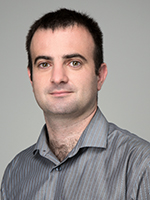
Jordi Serrano Pons
Consultant at World Health Organization; CEO & Founder, UniversalDoctor, Barcelona
Short CV: Physician and founder of different start-ups/initiatives such as the UniversalDoctor Project, the objective of which is to improve multilingual communication between health professionals and patients using new technologies. Another initiative is ZeroMothersDie, its objective is to reduce maternal mortality through the use of phones and ITC. Jordi Serrano Pons also works as a consultant in the World Health Organisation and has been collaborating with the Geneva Health Forum in Geneva, Switzerland.

Andreas Strouhal
CEO, Medbee, Vienna; IV. Medizinische Abteilung/Kardiologie, Krankenhaus Hietzing, Vienna
Short CV: Andreas Strouhal MD, is an interventional cardiologist and head of the echocardiography department in Krankenhaus Hietzing. Throughout his career he helped in improving the quality of training for junior medical doctors including 123sonography, a leading online course for echocariodiography. As founder of Medbee, he is making his vision a reality: Medbee will drastically improve the quality of medical care with the aid of specific individualized medical knowledge by connecting each doctor to the wisdom of a professional community.
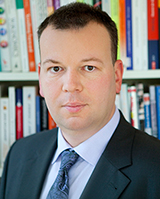
Stefan Weber
Director Content Factory, KnowledgeFox
Short CV: Stefan Weber, Mag. Dr. Priv. Doz., is a communication researcher, journalist and book author. He graduated at the institute for communication science of University of Salzburg and at the institute for communication science of University of Vienna. He wrote for German-speaking newspapers, was editor of the renowned online journal “Telepolis” and wrote several books on digitalization topics before he joined the KnowledgeFox team as Director of the Content Factory. Stefan Weber was assistant in research projects founded by FWF and was awarded with the APART programme (Austrian programme for Advanced Research and Technology). His main interest is producing and safeguarding content quality and good scientific practice. At KnowledgeFox, he is responsible for the development and for rolling out high quality MicroCourses on an international level.

Claudia Zimmermann
Assistentin, Institut für Wirtschaftspädagogik, Universität Graz
Short CV: Claudia Zimmermann, Mag. MSc, is currently working as a research assistant at the Academy of New Media and Knowledge Transfer as well as the Department of Business Education, University of Graz. She is also associated with the Department of Sociology, where she is employed as an external lecturer. Her research areas of interest are public health, evidence-based social intervention as well as statistical analysis and research methods in general.